
• all services
    • Virtual Waiting Room
    • All Services
    • Aging Services
    • Autism
    • Behavioral Health
    • Justice & Child Welfare
    • Community Empowerment Programs
    • Education
    • Foster Care & Adoption
    • Intellectual and Developmental Disabilities (IDD)
    • Training & Support
  • about
    • about
    • news
  • free resources
  • events
    • Events
    • Wellness Center Events
  • careers
  • contact
  • pay online
  • give
search icon
back button menu
  • all services
    • Virtual Waiting Room
    • All Services
    • Aging Services
    • Autism
    • Behavioral Health
    • Justice & Child Welfare
    • Community Empowerment Programs
    • Education
    • Foster Care & Adoption
    • Intellectual and Developmental Disabilities (IDD)
    • Training & Support
  • about
    • about
    • news
  • free resources
  • events
    • Events
    • Wellness Center Events
  • careers
  • contact
  • pay online
  • give

news and highlights

An outpouring of wanna-be volunteers, as agencies try to help them do it safely

March 27, 2020 by Rob Anderson

This article was originally published in the Pittsburgh Post-Gazette.

By Bob Batz, Jr. | March 27, 2020
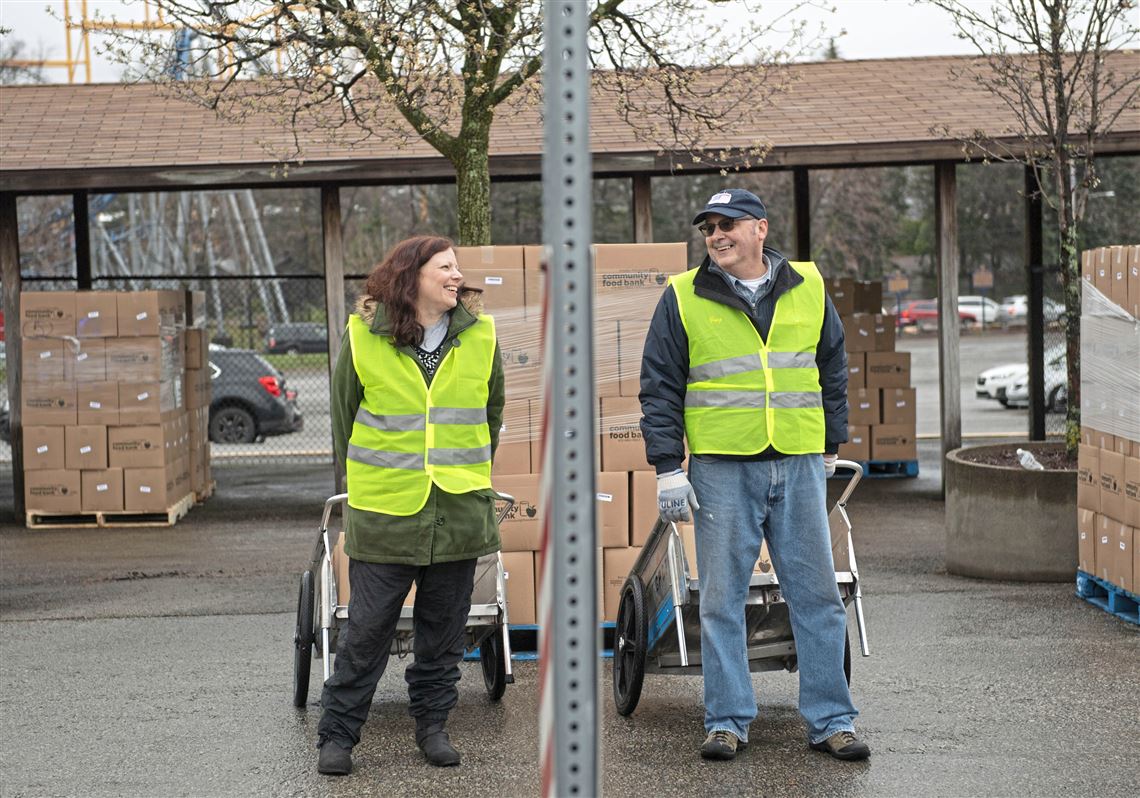
Photo: Emily Matthews/Post-Gazette

The COVID-19 crisis is increasing opportunities for volunteering but also limiting them, and in sometimes surprising ways that nonprofit groups are still working out.

For the first time in decades, for example, the state Fish and Boat Commission announced last month that volunteers would not be allowed to help with the seasonal stocking of trout in streams. The idea is to prevent people from spreading the virus to each other, even in an outdoor setting.

That’s not to say that those who want to help out can’t do anything, but it is more complicated than it might have been in previous crises.

Pennsylvania’s stay-at-home orders restrict getting out and about in Allegheny County and other populous places, but Gov. Tom Wolf’s allowable activities for individuals include: “Getting necessary services or supplies for themselves, for their family or household members, or as part of volunteer efforts, or to deliver those services or supplies to others to maintain the safety, sanitation, and essential operation of residences.”

Pittsburgh Cares, an umbrella group that connects volunteers with causes to help, still is figuring out how to help that happen safely.

The group notes atop its COVID-19 page-in-progress, pittsburghcares.org/​covid19, “We are deferring judgment for all volunteer needs and projects to our nonprofit, school and corporate partners until further notice.”

Working from home, its small staff was working to keep its calendar of volunteer opportunities updated while acknowledging that its partners’ schedules and needs are in flux.

“We are working with nonprofits that are seeing an increase in need to identify safe ways for volunteers to support the community and exploring opportunities for virtual support,” the site notes. “Please stay tuned for more information as we work through these new situations.”

One thing the group quickly realized, said Pittsburgh Cares Executive Director Amanda Trocki, was that it needed to take care of its older volunteers as well as higher-risk seniors in the community.

About a week ago, the group signed up volunteers to be “buddies” for them, and so far, more than 180 have.

Meanwhile, the group is stressing that nonprofits must screen volunteers who are ill or may have been exposed to the virus. Likewise, the United Way of Southwestern Pennsylvania is continuing to encourage people who want to help, but stresses on its website, “Stay at home if you’re sick.”

The United Way site says volunteers should follow other health-related recommendations, such as calling ahead when delivering food or other supplies and leaving them at the door to be picked up to avoid person-to-person proximity. And of course, wash your hands.

The United Way advises seeking opportunities involving groups of 10 or fewer, and to embrace “solo volunteering” — delivering food to a neighbor, distributing fliers — because that accomplishes social distancing while “helping people to feel connected.”

The organization is updating volunteer opportunities at uwswpa.org/​be-a-volunteer. These include “virtual volunteering” — making calls to seniors for North Hills Community Outreach and Wesley Family Services and being a pen pal for YWCA.

Wendy Koch, the director of volunteer engagement for the United Way of Southwestern Pennsylvania, said Thursday that many groups are shifting to offer more such noncontact opportunities, which also allow people confined to their own homes to help.

There are many people who are off work and at home suddenly find themselves free and wanting to volunteer, she noted. “The needs are still out there; they’re just very specific in this environment.”

Cranberry on Thursday launched a Community Response Team of residents willing to chip in to “help make the day a little brighter.” Nearly 30 people signed up the first day, even though they were required to undergo a health screening and sign a waiver.

“It’s more volunteers than people who need help,” spokeswoman Stephanie Fedko said, adding: “People are awesome.”

Those people are on a spreadsheet as willing to pick up and deliver goods, make and deliver CARE packages, pick up school materials, drop off prescriptions — basically, to do whatever they’re asked to do.

Other volunteers or people who need help can connect at cranberrytownship.org/​CRT or by calling 724-776-4806. The team also is accepting donations to buy reloadable gift cards for volunteers to buy essential goods for people in need.

Ms. Fedko knows several big churches in the area also are marshaling forces of volunteers.

In the South Hills, too, neighbors were making less formal arrangements to help each other via social media.

Three South Park friends — Jamie Christian, Stacie Kennelly and Sara-Summer Oliphant — started an effort called OHM, or Our Helping Meals, to support at-risk families and immune-compromised individuals during the pandemic. With support from AMPD Group restaurants and other partners, they’re putting healthy volunteers to work carefully packing and delivering food and meals, diapers and kids activities (call 412-334-8631 or email jamie.christian@ltbcsga.org).

Accepting donations

Established groups are adapting.

The Greater Pittsburgh Community Food Bank this week stopped having big groups come to its Duquesne warehouse, but it kept up community distributions until Thursday, when it temporarily canceled those. It launched “a safe, efficient emergency drive-up food distribution model” starting Monday, and it will need volunteers for that.

Almost every organization is accepting donations, but those need not be just in the form of dollars.

Blood banks are extending their hours. Light of Life Rescue Mission seeks cleaning products and food. Ms. Trocki says Pittsburgh Cares is going to set up as a collection site for such things, which it will sanitize and distribute.

Pittsburgh Cares’ site offers something else people can do in the meantime: “Share hope.”

To that end, it has posters that people can print and place in their windows with messages including, “Thank you, frontliners” and “We’ll get through this, Pittsburgh.”

The United Way’s Ms. Koch noted that even after the crisis subsides, the impacts will continue for a long time, so would-be volunteers can take the long view. “There will be lots of ways for people to get involved and to be engaged.”

Bob Batz Jr.: bbatz@post-gazette.com, 412-263-1930 and on Twitter @bobbatzjr.

Correction: This article originally misspelled the name of Sara-Summer Oliphant. 
Filed Under: news and highlights

Helpful Links and Resources during the COVID-19 Pandemic

March 20, 2020 by Casey Nowicki

As things continue changing rapidly during the COVID-19 Pandemic,  Wesley Family Services wanted to provide you with a few helpful resources to help empower you and your families. Listed below are various links for providers and families covering topics from mental health, coping with anxiety & stress, and helping children cope with emergencies.

Wearing Masks- Social Story with Narration created by WFS Creative Arts

Coronavirus Social Story PDF Document  created by WFS Creative Arts
Click here for the animated version of the Coronavirus Social Story

Social Distancing Social Story PDF Document  created by WFS Creative Arts
Click here for the animated version of the Social Distancing Social Story

COVID-19 NAMI  Guide
https://www.nami.org/getattachment/About-NAMI/NAMI-News/2020/NAMI-Updates-on-the-Coronavirus/COVID-19-Updated-Guide-1.pdf

AHN  Braddoock Urgent Care and Pittsburgh’s  North Shore is now offering COVID -19 testing.
Click the following link to read more information in English, Arabic, Nepali, Spanish, Swahili
https://wfspa.org/wp-content/uploads/2020/05/AHN-Braddock-Urgent-Care-and-North-Side-COVID-19-testing-in-English-Arabic-Nepali-Spanish-Swahili.pdf

Resources Available from the Commonwealth of Pennsylvania

PA Warmline: 1-855-284-2494 and TTY-724-631-5600:

  • For staff who struggle with the day to day balance
  • Families who are reaching points of breaking points of stress
  • Individuals who feel anxious around staying home or current pandemic
  • Anyone who is looking for a where to turn or someone to talk to
  • IDD and autism trained too.

Protect Your Family’s Mental Health During the COVID-19 Pandemic
https://health.usnews.com/wellness/for-parents/articles/protect-your-familys-mental-health-during-the-covid-19-pandemic

Love in the time of Coronavirus: A HOPE-informed guide for parents by Dr. Bob Sege, MD
https://positiveexperience.org/love-in-the-time-of-coronavirus-a-hope-informed-guide-for-parents/ 

Taking Care of Your Emotional Health *also available in Spanish
https://emergency.cdc.gov/coping/selfcare.asp

Helping Children Cope with Emergencies *also available in Spanish
https://www.cdc.gov/childrenindisasters/helping-children-cope.html

Responders: Tips for taking care of yourself
https://emergency.cdc.gov/coping/responders.asp

Coronavirus (COVID-19): How to Talk to Your Child
https://kidshealth.org/en/parents/coronavirus-how-talk-child.html

For any that are available in Spanish, there will be a second link under the article title on the webpage

Filed Under: news and highlights

A Pittsburgh guide to coronavirus

March 18, 2020 by Rob Anderson

This article was originally published by the Pittsburgh City Paper.

A Pittsburgh guide to coronavirus

Information on schools, testing, financial aid, public health, and voting

By Ryan Deto | March 18, 2021

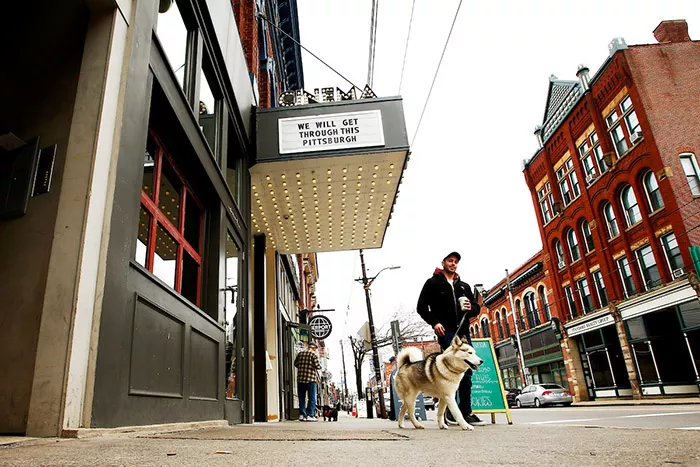
“We Will Get Through This Pittsburgh” displayed on the marquee at Row House Cinemas in Lawrenceville – CP PHOTO: JARED WICKERHAM

On March 12, Allegheny County Executive Rich Fitzgerald declared a state of emergency related to coronavirus. On the afternoon of March 13, after initially saying the coronavirus would be contained and downplaying its severity, President Donald Trump finally declared a national emergency. On the evening of March 13, Pittsburgh Mayor Bill Peduto declared a state of emergency. At first, gatherings of over 50 people have been prohibited; now, the White House is suggesting gatherings be kept to 10 people or fewer. In-dining sections of restaurants and bars in Pennsylvania are closed for at least 14 days starting on Tue., March 17.

It’s more than official: Coronavirus is a serious health threat, and no American leaders are now taking it lightly.

As of March 18, there are at least 133 presumptive positive or confirmed coronavirus cases in Pennsylvania. The Pittsburgh-area has at least 14, with 12 confirmed or presumptive positive cases in Allegheny County and one each confirmed in Beaver and Washington counties. The virus has spread exponentially in other countries, including China and Italy. Hundreds of thousands of cases have been confirmed, and more than 8,700 people have died worldwide due to coronavirus.

As a precaution, hundreds of events and gatherings have been canceled or postponed throughout the region. The city, county, and state have suggested “social distancing” techniques so that people don’t potentially spread the virus through touch or close interactions.

Coronavirus, which causes the disease COVID-19, has already impacted almost every aspect of life in Pittsburgh, from school closings to public health behavior to the local economy. And as the virus likely spreads over the foreseeable future, many more aspects of life in the Steel City will be affected.

In response to coronavirus, Pittsburgh City Paper has created a guide to help readers and residents understand how the virus has affected the region, and offering suggestions to best cope during the global pandemic.

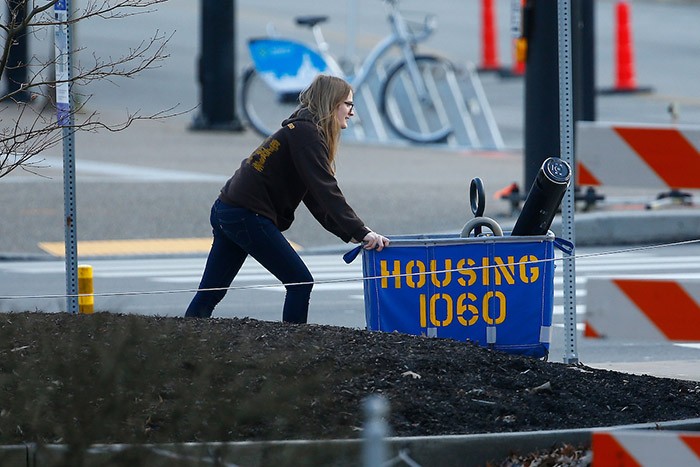
A student pushes a housing cart with her belongings on the University of Pittsburgh campus in Oakland on Sun., March 15. – CP PHOTO: JARED WICKERHAM

Public Schools

Starting March 16, all public schools in Pennsylvania are shut down for at least two weeks. Some school districts, like Fox Chapel and Mt. Lebanon, have instituted even longer mandatory shutdowns. Fox Chapel public schools are closed at least until April 13, and Mt. Lebanon public schools are closed until at least April 14.

These mandatory closures mean children are mostly confined to their homes, since Fitzgerald has called on non-essential businesses, including childcare facilities, to also close down for at least two weeks. Students who normally receive free meals while at school can still be served meals from select school staff at each public school. Pittsburgh Public Schools is serving “Grab and Go” meals at all 54 city schools and early childhood education centers from 11 a.m.-1 p.m. on weekdays. Clayton Academy and Student Achievement Center are also serving take-away meals.

In total, PPS is providing take-away meals at 30 locations across the city. They are listed below:

Pittsburgh Morrow: Primary Building – 1611 Davis Ave, Brighton Heights
Pittsburgh Perry High School: 3875 Perrysville Ave., Observatory Hill
Northview Heights Public Safety Center: 441 Mount Pleasant, Northview Heights
Pittsburgh Project: 2801 N Charles St., Perry South
Pittsburgh Spring Hill: 1351 Damas St., Spring Hill
Arlington Recreation Center: 2201 Salisbury St., Arlington
Pittsburgh Beechwood: 810 Rockland Ave., Beechview
Pittsburgh Carrick High School: 125 Parkfield St., Carrick
St. Paul AME Church: 400 Orchard Place, Knoxville
Tree of Life Brookline: 1036 Brookline Blvd., Brookline
Pittsburgh Roosevelt: Intermediate – 200 The Blvd., Carrick
Warrington Recreation Center: 329 E. Warrington Ave., Allentown
Pittsburgh West Liberty: 785 Dunster St., Brookline
Pittsburgh Whittier: 150 Meridan St.,  Duquesne Heights,
Pittsburgh Colfax: 2332 Beechwood Blvd., Squirrel Hill
East Hills Community Center: 2291 Wilner Drive, East Hills,
Pittsburgh Faison: 7430 Tioga St., Homewood
Glen Hazel Community Center: 895 Johnston Ave., Glen Hazel
Pittsburgh Greenfield: 1 Alger St., Greenfield
Pittsburgh Mifflin: 1290 Mifflin Road., Lincoln Place
Pittsburgh Obama: 515 N Highland Ave., East Liberty
Paulson Recreation Center: 1201 Paulson Ave., Lincoln-Lemington
Salvation Army Homewood: 8020 Frankstown Ave., Homewood
Pittsburgh Chartiers Early Childhood Education Center: 3799 Chartiers Ave., Windgap
Emanuel United Methodist Church for Kids Meal Network: 825 Lorenz Ave., Elliott
The M Garden: 3049 Chartiers Ave., Sheraden
Salvation Army: Westside -1821 Broadhead Fording Rd., Fairywood
Pittsburgh Westwood: 508 Shadyhill Rd., Westwood
Pittsburgh Miller: 2055 Bedford Ave., Hill District
Pittsburgh Weil: 2250 Centre Ave., Hill District

School districts are also considering the potential learning loss from prolonged closures. The Pennsylvania Department of Education is encouraging students and parents to access online learning opportunities. PPS is suggesting students use the district’s CLEVER portal located at pghschools.org/studentresources to learn more.

Local colleges and universities have also canceled face-to-face classes and events for the foreseeable future.

Hospitals and Testing

Pittsburgh-area residents showing symptoms of coronavirus or those who have been in contact with known infected patients should try to get tested. According to the Centers for Disease Control and Prevention, symptoms after 2-14 days of exposure include fever, cough, and shortness of breath. Emergency warning signs of COVID-19 that require immediate medical attention are difficulty breathing or shortness of breath; persistent pain or pressure in the chest; new confusion or inability to arouse; bluish lips or face.

There is testing available in the Pittsburgh area. Central Outreach Wellness Center has partnered with Quest Diagnostics and has drive-up testing at two locations: Pittsburgh Zoo main parking lot, 7370 Baker St., Highland Park and 2360 Hospital Drive, Aliquippa. Testing begins at 11 a.m. each day. Central Outreach Wellness Center and Quest Diagnostics has limited test kits, so testing will be offered based on screening questions. Willing patients need to present a photo ID and an insurance card to be tested. Central Outreach Wellness will not turn anyone away who doesn’t have an insurance card, according to a press release.

UPMC has developed its own test for coronavirus and has opened a testing facility in the South Side. However, this facility is not open to the public. According to a press release, “Patients must have a physician referral approved by UPMC’s infection prevention team and an appointment to have their specimen collected for testing by either UPMC or public health authorities.”

UPMC says it plans to open up similar facilities in Harrisburg, Erie, Williamsport, and Altoona.

Allegheny Health Network will be providing drive-up collection sites for patients who have been previously evaluated by an AHN provider for COVID-19 symptoms, and receives a valid prescription order. A collection site in Wexford opens on March 18, and sites in Bethel Park, Monroeville, and Erie should be open within a week. Sites are open from 8 a.m.-5 p.m. daily and should be able to accommodate about 20 patients an hour, according to AHN officials.

Additionally, people going to area hospitals for other medical reasons should know they will likely be screened for coronavirus. AHN announced on March 16 that all visitors will be screened and asked if they have traveled domestically or internationally in the last 14 days and if they have a cough or fever. Those who answer yes will not be permitted inside AHN hospitals.

A woman wears a mask outside of Heinz Chapel in Oakland on Sun., March 15. – CP PHOTO: JARED WICKERHAM

Elderly and Vulnerable Populations

The Pittsburgh-area has one of the highest average-age of any metropolitan area in the U.S. This means we have a lot of elderly people and senior citizens who are the most vulnerable to negative health effects, including death, related to COVID-19.

Elderly residents are advised to stay at home as much as possible and to make sure they have access to several weeks of medications and supplies in case they need to stay quarantined at home for prolonged periods of time. Many local pharmacies provide home delivery, and orders can be placed through phone calls.

Local groups like Wesley Family Services have extensive experience in helping elderly people in the Pittsburgh area, and should be contacted if elderly people need assistance. Groups like Lawrenceville United are trying to build networks to provide up-to-date information for seniors. Look to local community groups and religious entities to see if they need any help getting groceries and other items to seniors in the neighborhood. Local Meals on Wheels groups may also need additional help in servicing seniors during the pandemic.

Starting on March 20, the city of Pittsburgh started to hand out pre-packaged meals for seniors who are currently registered for normal congregate meal service. City will be serving about 100 meals per day. Meals are take-out only and can be picked up between 11 a.m.-1 p.m. on Mondays, Wednesdays, and Fridays at the following locations:

Glen Hazel: 945 Rosselle Court, 15207
Sheraden: 720 Sherwood Ave., 15204
South Side: 12th St & 1 Bedford Square, 15203
Lawrenceville: 4600 Butler St., 15201
Homewood: 7321 Frankstown Ave., 15208
Hazelwood: 5344 Second Ave., 15207

Community groups and religious institutions are also good sources to guide other vulnerable populations towards information about coronavirus. Homeless people may not be following the news as closely as others, and organizations can help explain to them the coronavirus pandemic and help them get services if needed.

East End Cooperative Ministry in East Liberty has stopped serving sit-down meals, and instead is passing out grab-and-go meals. Allegheny County officials are still looking for locations to house the homeless who are not showing signs of  COVID-19 symptoms.

Pittsburgh’s Urban Redevelopment Authority has approved a new program for households at or below 80% Area Median Income (AMI) who have been affected by the economic impact of the coronavirus pandemic. Beginning Monday, March 23, qualifying households can apply for rent, mortgage, and/or utility payment assistance if their work hours have been cut because of coronavirus closures.

“This is obviously a really critical action today and sorely needed at this moment in time and I commend Jessica Smith Perry and the rest of the URA staff for acting quickly and coming up with this program on such short notice,” said URA Board Chair Sam Williamson in a press release.

Interested parties can learn more here. The program is only open to City of Pittsburgh residents who have had hours cut or been layed off because of coronavirus, and are struggling to make rent, mortgage, and/or utility payments.

Immigrants, and those with little-to-no English language skills, should also be guided to groups like Casa San Jose and Jewish Community Center, where people can offer information on the coronavirus in Spanish and different languages.

State Rep. Sara Innamorato (D-Lawrenceville) is also compiling a running list of local COVID-19 resources. This list can be accessed on Innamorato’s official Twitter account.

The United Way of Southwestern Pennsylvania and local foundations like the Heinz Endowments are providing help to people who can’t afford to stock up on necessary groceries and supplies. Contact United Way’s 2-1-1 Southwest helpline for requests related to food, health care, and utility and rent assistance.

Scammers are also trying to take advantage of fear over coronavirus. The CDC recommends not clicking on links from sources you don’t know and to ignore online offers for vaccinations. (There are currently no vaccines or medications available to specially treat COVID-19.) Pennsylvania Attorney General Josh Shapiro is also documenting any price-gouging schemes related to coronavirus for potential prosecution. Information on any price-gouging schemes can be sent to pricegouging@attorneygeneral.gov.


A man carries shopping bags in Downtown Pittsburgh on Sun., March 15 – CP PHOTO: JARED WICKERHAM

Finances and Loans

The Pennsylvania Department of Labor and Industry announced this week that workers affected by coronavirus may be eligible for unemployment benefits. Reasons for potentially being eligible include working at a business that temporarily closes or goes out of business because of coronavirus; employer reducing hours because of coronavirus; having been told not to work because your employer believes you might get or spread coronavirus; or being told to self-quarantine. Apply at uc.pa.gov/Pages/covid19.aspx.

On March 16, Gov. Wolf announced that all non-essential businesses must shut down for at least two weeks. Only grocery stores, pharmacies, and medical centers will remain open, as well as the take-out sections of restaurants.

Service industry workers can also seek help from the Pittsburgh Virtual Tip Jar, a website started by Carnegie Mellon University’s Center for Ethics and Policy. Service industry workers can enter their Venmo account information, and people can send tips to their favorite bartender, stylist, and other service industry employees. Reach the website at centerforethicsandpolicy.com/PGHTipJar.html

For small business owners, nonprofit Hebrew Free Loan Association is offering interest-free loans of up to $5,000 for individuals and businesses affected by coronavirus closures. Interested parties can visit hflapgh.org/coronavirusloan to see if they qualify.

Local crowdfunding investor platform Honeycomb Credit is offering relief loans up to $50,000 with a six-month interest only period. Qualifications include between 1-3 years of operating history, and a 2019 with profitability and/or breakeven finances. Visit honeycombcredit.com/relief for more details.

The city of Pittsburgh is gathering information from nighttime businesses that are struggling during the coronavirus closures. They are asking effected business to fill out a survey, so they can help guide appropriate aid.

Federal, state, and municipal governments are also working to collect information on closed businesses to help them make payments on loans currently borrowed and provide financial relief.

On March 18, state Sen. Lindsey Williams (D-West View) announced a Small Business First (SBF) loan program will soon be accepting applications. The current interest rate on these loans is 3%, but according to a press release from Williams, the state government has the authority to lower these rates and has indicated support for doing so. More than $60 million in funds are available. Interested parties can apply here.

Pittsburgh artists have created a crowdfunding page on GoFundMe called the “PGH Artists Emergency Fund,” and are accepting donations to provide at least $250 per artist to help relieve the costs due to canceled gigs and jobs.

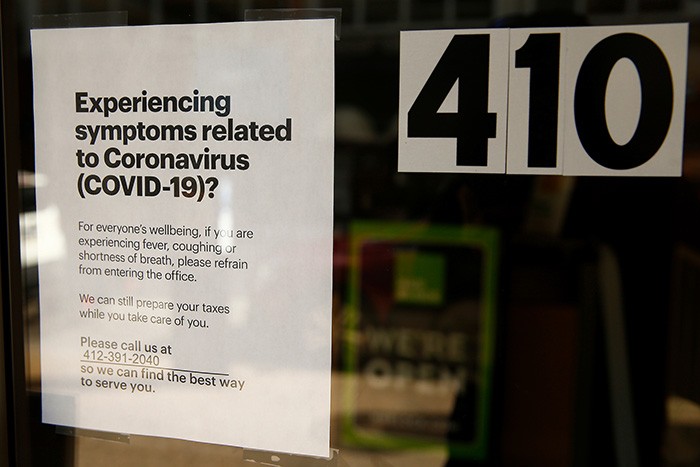
A sign hangs on the door of H&R Block on Smithfield Street in Downtown Pittsburgh on Sun., March 15. – CP PHOTO: JARED WICKERHAM

Staying Healthy

Stopping the spread of coronavirus is crucial during this time of increasing confirmed cases. One of the easiest and best ways to help is to wash your hands often and thoroughly. Handwashing is capable of reducing respiratory infections by 15-20%. Make sure to scrub with soap for at least 20 seconds.

Social distancing is also another effective tool against spreading coronavirus. The White House has said that nobody should gather in groups of more than 10 people. Also, try to stay more than six feet away from people, since you don’t know if they are infected.

For the most part, this means socializing will be much different. Bars and restaurants are closed temporarily in the state, but that doesn’t mean that people can’t go for walks in the park or neighborhood. Remember, just keep your distance from other people.

If you do come into contact with others, try not to greet with a handshake or hug. Elbow or foot taps are preferred, or just wave from a distance. The Pennsylvania Department of Health recommends that children not participate in play dates or sleepovers during the outbreak.

If you are experiencing any mental health crises because of the anxiety and stress related to the global pandemic, text PA to 741741 on your mobile phone, and the Crisis Text Line will connect you to mental health services.

Voting

Pennsylvania’s primary election is scheduled for April 28. It’s not clear if the governor will move the election date as other states have, but Wolf said at a press conference on March 16 that he is “certainly taking that into consideration.”

Even if the primary stays scheduled for April 28, it may be prudent to take advantage of Pennsylvania’s new mail-in voting law. Citizens can now apply for a mail-in ballot with no reason necessary. This means that people can vote entirely from the comfort of their home.

In the coming days, Allegheny County will be encouraging residents to mail-in votes to slow the spread of coronavirus. Ballots are not yet finalized, but registered voters can request a mail-in ballot by filling out an online or mail application. County election departments will then send voters a ballot to complete and return.

To request a mail-in ballot, fill out an application on paper or online at votespa.com. Registered voters that apply online must present a valid Pennsylvania driver’s license or photo ID issued from the Pennsylvania Department of Transportation. Applications are in English and Spanish.

Note that if you request a no-excuse mail-in ballot, it is best to complete it and vote via mail. Voters who request a mail-in ballot and vote via mail are barred from voting at the polls on Election Day. If you request a mail-in ballot, your polling place will be notified and will flag you so that you don’t try to vote again at the polls. If you didn’t complete your mail-in ballot, and the poll book confirms that you haven’t voted, then you can still go to the polls to vote, but you must request a provisional ballot from poll workers.

Mail-in ballot applications for the upcoming April 28 primary election must be received by your county election office by 5 p.m. on April 21. The final day to register to vote is 15 days before the election. With the primary on April 28, the final day to register to vote is April 13.

Filed Under: news and highlights

WESLEY FAMILY SERVICES IS PROUD TO SUPPORT REP. DAN MILLER’S DISABILITY AND MENTAL HEALTH SUMMIT

March 3, 2020 by Rob Anderson

Pittsburgh, PA—State Representative Dan Miller (D-42) will host the annual Disability & Mental Health Summit on Tuesday, March 3 at the David L. Lawrence Convention Center. The Summit is free and open to the public. This year’s Summit is particularly special because 2020 marks the 30th Anniversary of passage of the Americans with Disability Act. This will be the seventh year Rep. Miller has hosted the Summit, which provides individuals, families, and professionals with access to the largest collection of disability and mental health resources in western Pennsylvania at any one time. The Summit will feature educational sessions, speakers, resource fair, a bipartisan legislative panel, and continuing education classes.

Link to Full Media Advisory

Filed Under: news and highlights

WOMEN IN POLITICS: EVENT PROVIDES DISTINCTIVE NETWORKING, PHILANTHROPIC OPPORTUNITY

March 1, 2020 by Rob Anderson

This article was originally published in the Observer-Reporter.
Observer-Reporter

They’re not exactly of the same generation, but Betty Copeland and Bethany Hallam have something in common that most of us never will experience.

Both are elected officials, with Copeland serving as Bridgeville Borough’s mayor and Hallam, half a century her junior, representing Allegheny County Council at large.

They joined a group including state legislators, school board directors and municipal leaders for a “Women in Politics” event hosted recently by South West Communities Chamber of Commerce as part of its ongoing Impactful Women program.

“Every time that we do an Impactful Women event, we pick a different topic that is a good topic for women: something you can learn from, something in which you might get to know people you would not in real life,” chamber executive director Mandi Pryor said. “Tonight, in the election year, I thought it would be great to kind of intermingle people from different areas, and our elected officials to get to know what’s going on in the region, get to know each other and maybe just figure out who’s on your ballot, because sometimes you just don’t know.”

Held at Bella Sera in Cecil Township, the event featured networking opportunities and what ostensibly was a 50/50 raffle. But those in attendance agreed that all the proceeds should go to Wesley Family Services, the beneficiary selected for the evening.

Heidi Buckley, Wesley’s senior manager for community engagement, provided some background about the nonprofit, which has locations in Washington and South Fayette Township, and operates the former Johnston School in Upper St. Clair.

“Wesley Spectrum and Family Services joined together about two years ago to be Wesley Family Services, which means that our growth has enabled us to help 30,000 clients,” she said. “We have 1,200 employees doing wonderful work in behavioral health and other areas.”

Those include aging services, justice and child welfare, community empowerment programs, foster care and adoption, and programs for people with intellectual and developmental disabilities.

“We are the largest provider of autism services in the Western Pennsylvania area,” Buckley noted, “and very proud of that work that we do.”

Another nonprofit represented at the chamber event was She Deserves, with founder Susan Miller on hand to provide information about the organization’s efforts on behalf of survivors of domestic abuse.

“We help identify what their strengths are and help them build entrepreneurial skills based on their strengths, so that they can become financially self-sustainable,” she said. “What we see most common with all of these women is they give up control, and they have trouble gaining that control back. Once they get out that situation, they have to learn how to take control of their lives again.”

Launched in 2018, She Deserves offers four areas of programming focusing on empowerment, peer support, business development and business grants.

“We don’t give them money, but if they need a website of laptops, we can get that taken care of for them,” Miller said about the grant program, which operates through strategic partnerships with area businesses.

She Deserves serves women from the startup level to seasoned entrepreneurs.

“The most common that I’m seeing coming through the programs are women who already have businesses, but they’re struggling with their businesses because they have to go through the healing. They have to become empowered again. And so their businesses are suffering as a side effect of the trauma they’re going through,” Miller said.

“I’ve talked to women 35 years later who are still dealing with the trauma that they’ve gone through, and it continues to impair their lives and their businesses because they haven’t worked through those issues.”

For more information, visit Wesley Family Services at wfspa.org, She Deserves at shedeserves.yolasite.com and South West Communities Chamber of Commerce at southwestcommunitieschamber.org.

Filed Under: news and highlights

WESLEY FAMILY SERVICES’ $18.2M COMPLEX IN NEW KENSINGTON ON TARGET TO OPEN AUGUST 1

February 25, 2020 by Rob Anderson

This article was originally published in the Tribune Review.
By Kevin Smith
Tribune Review

Herb Hughes of New Kensington sees the positives of working on the Pioneer Apartments project in New Kensington.

It’s close to Hughes’ home, and the project by Wesley Family Services aims to inject life into the city’s business district.

The $18.2 million apartment building is being built on the site of a former parking lot, between 10th and 11th streets and Fourth Avenue and Cherry Alley. Mistick Construction is handling construction, and the apartments are on target for an Aug. 1 opening.

Stephen Christian-Michaels, chief strategy officer of Wesley Family Services, said the building will house 36 two- and three-bedroom apartments, with rent ranging from $200 to $800 a month, and nine apartments will be equipped for people with disabilities who qualify for federal Section 8 housing.

Wesley has received 185 applications for the regular apartments and 25 for the handicapped-accessible ones, according to Christian-Michaels.

Wesley Family Services also will move all of its staff from its New Kensington and Tarentum offices into the building. That will mean the move of between 80 and 100 employees to start. The plan is to expand that to 125 in the next seven years.

At Pioneer Apartments, Wesley Family Services will offer programs and services to the building’s residents and local residents.

Pioneer Apartments is funded largely through two tax credit programs — new market tax credits from the nonprofit Corporation for Supportive Housing and low-income housing tax credits through the Pennsylvania Housing Finance Authority. It also received grant funding from the Richard King Mellon Foundation and the Federal Home Loan Bank of Pittsburgh, as well as a no-interest loan from the housing finance authority.

Christian-Michaels said area workers were guaranteed jobs when the project was announced.

There are now more than five workers with ties to the Alle-Kiski Valley on site each day, according to Christian-Michaels.

“It’s beneficial to the project and having these local workers here is beneficial to the community,’’ Christian-Michaels said. “Mistick has done a great job getting all these people hired.

“We started this on May 26. It was a rainy June, but we have had perfect weather this winter and we should be right on target.’’

The effort to hire local workers and improve New Kensington has not gone unnoticed by Hughes.

“It’s long overdue to see a project like this in New Kensington,’’ he said.

Tuesday was Hughes’ third day on the job. He recently graduated from Triangle Tech, where he was trained in general contracting, drywall, plumbing and electrical work.

Another recent Triangle Tech graduate, Adrian Bell, grew up in New Kensington until ninth grade. He graduated from Kiski Area High School and now lives just past the Lincoln Beach neighborhood of Upper Burrell.

“It’s just five or 10 minutes away,’’ Bell said. “Having the ability to get a job here will help my career.’’

Wendell Green, also of New Kensington, is working with the plumbing crew.

“It’s a nice opportunity for us,’’ Green said. “You can get out, and it’s close by and easy to get to.’’

New Kensington Mayor Tom Guzzo said this is what was envisioned when the project came together. He said the addition of jobs was critical and fits in with the work being done by the Penn State New Kensington “Corridor of Innovation,’’ Knead Community Café and the Voodoo Brewery.

“It’s important to employ people here in New Kensington,’’ Guzzo said. “And it’s important to hire people from not only New Kensington, but from throughout the Alle-Kiski Valley.”

Filed Under: news and highlights

  • « Previous Page
  • Page 1
  • …
  • Page 12
  • Page 13
  • Page 14
  • Page 15
  • Page 16
  • …
  • Page 21
  • Next Page »

Primary Sidebar

©2026 Copyright Wesley Family Services

Complaints | Notice of Privacy Practices

Site by